

The programme
A programme built around the questions that matter
Six tracks, four formats, one purpose: to help public-serving institutions adopt new technology without losing the human part of the work.
Formats
How the Summit is structured
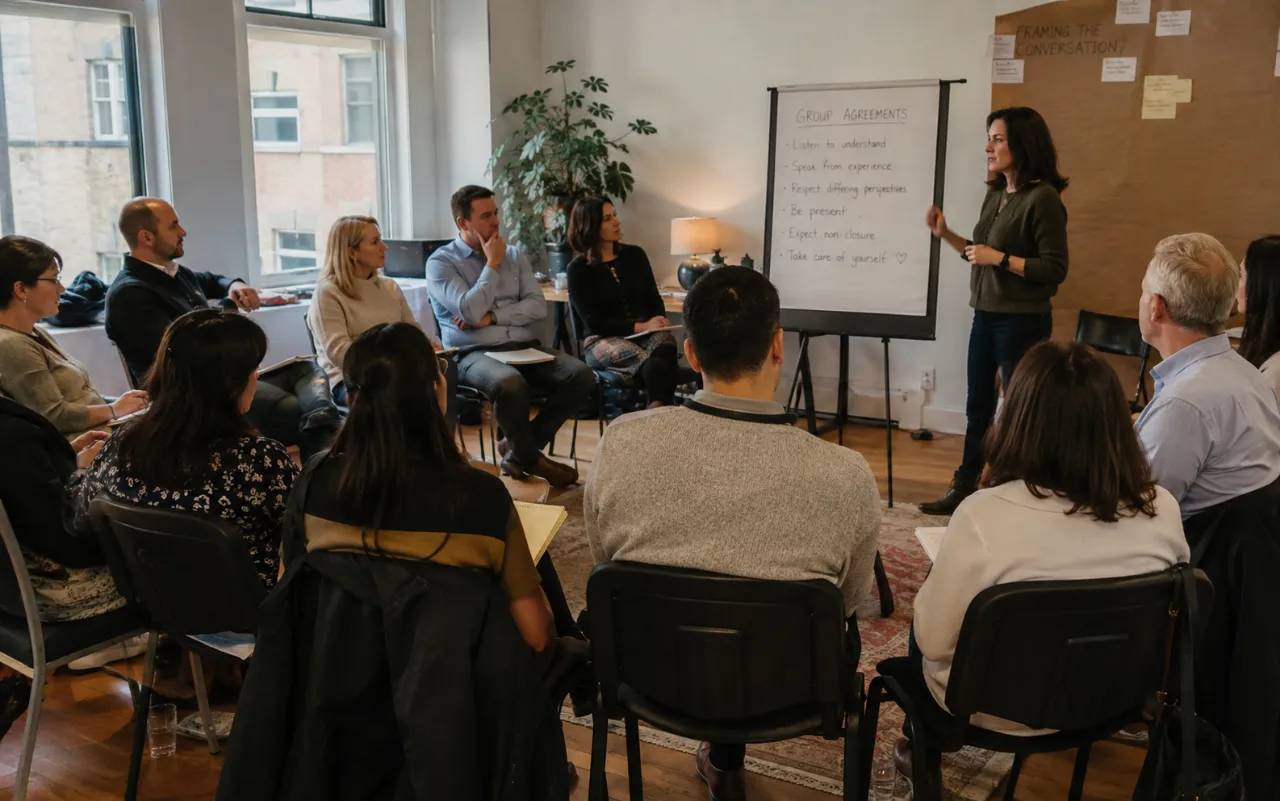
Shared sessions that set the questions the whole Summit is taking up, and return to them.
Focused sessions inside each track, led by people doing the work rather than describing it from a distance.
Smaller, structured sessions built to produce something — a position, a shared problem, a way forward — not just discussion.
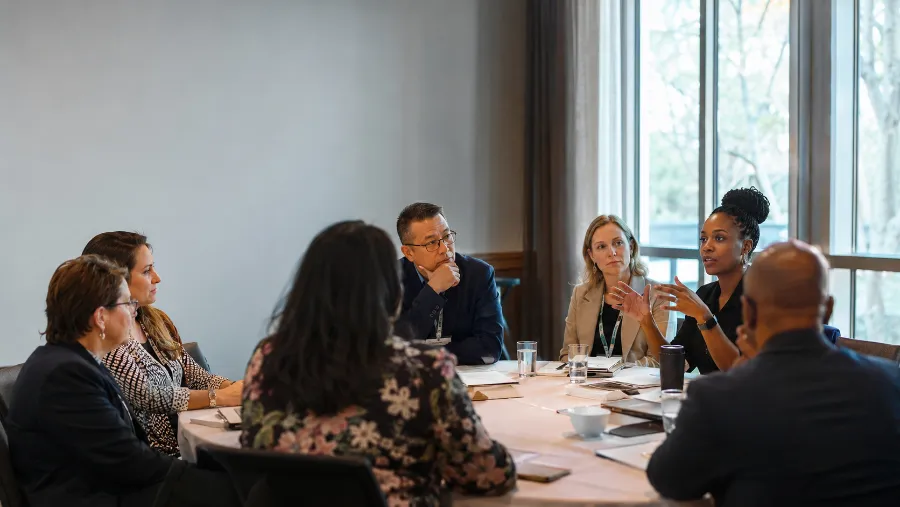
Deliberate time to compare notes across jurisdictions, roles and communities, where much of the real value is found.
Six tracks
Lines of inquiry
The subjects are set. The detailed session schedule and facilitators are published closer to the Summit.
 Responsible AI, Governance & Public TrustHow do public institutions adopt AI without spending the trust they depend on?02
 Privacy, Records, Cybersecurity & RiskHow do we protect the record while the systems that hold it change underneath us?03
 Workforce, Leadership & ChangeHow do people and teams carry change without losing the human part of the work?04
 Documentation, Administrative Burden & Service QualityHow do we reduce the paperwork without reducing the care?05
 Indigenous Data Governance, Community Authority & EquityWho holds authority over community data, and how is that authority respected in practice?06
 Procurement, Implementation & the Future Operating ModelHow do we buy, build and run these systems responsibly over the long term?Track 01
Track
Responsible AI, Governance & Public Trust
How do public institutions adopt AI without spending the trust they depend on?
The governance, accountability and oversight that decide whether automated systems earn public confidence — or quietly erode it. Where decisions are made, who is answerable, and how trust is kept.
Questions it takes up
- What must remain a human decision, and why
- Accountability when a system, not a person, decides
- Transparency that a member of the public can actually use
Built for: Leaders and public servants responsible for how these systems are governed and held to account.
Track
Privacy, Records, Cybersecurity & Risk
How do we protect the record while the systems that hold it change underneath us?
Privacy, information management, security and risk in services that hold some of the most sensitive records people ever create — and the discipline required to keep them safe.
Questions it takes up
- Privacy that survives contact with new tooling
- Records and retention when data moves between systems
- Security posture proportionate to real risk
Built for: Privacy, records, security and risk professionals in public-serving organizations.
Track 02Track 03Track
Workforce, Leadership & Change
How do people and teams carry change without losing the human part of the work?
The workforce reality of adoption: leadership, capability, morale and change that keeps the human relationship at the centre of human services rather than automating it away.
Questions it takes up
- Change that teams can actually absorb
- Leadership when the ground keeps shifting
- Capability without deskilling the work
Built for: Leaders and teams carrying the workforce and cultural weight of change.
Track
Documentation, Administrative Burden & Service Quality
How do we reduce the paperwork without reducing the care?
Documentation, administrative load and service quality — where the promise of efficiency meets the daily reality of practice, and where technology helps or gets in the way.
Questions it takes up
- Administrative burden that pulls time away from people
- Documentation that serves the work, not the audit
- Quality that survives efficiency pressure
Built for: Practitioners and service leaders closest to the daily work.
Track 04Track 05Track
Indigenous Data Governance, Community Authority & Equity
Who holds authority over community data, and how is that authority respected in practice?
Indigenous data governance, community authority and equity — data sovereignty, community control and the equity considerations that responsible adoption must hold at the centre, not the margin.
Questions it takes up
- Community authority over community data
- Equity as a design condition, not an afterthought
- Governance that respects who the data belongs to
Built for: Community leaders, and the public servants who work with and answer to communities.
Track
Procurement, Implementation & the Future Operating Model
How do we buy, build and run these systems responsibly over the long term?
Procurement, implementation and the operating model of the future — vendor responsibility, contracting, delivery and the operational choices that determine whether adoption is durable or brittle.
Questions it takes up
- Procurement that carries public-interest conditions
- Vendor responsibility written into the relationship
- An operating model that lasts beyond the launch
Built for: Procurement, delivery and operations leaders shaping the long-term model.
Track 06In development
The detailed schedule is published closer to the Summit
We do not circulate provisional session times. When the agenda, facilitators and room assignments are confirmed, they are published here and the priority list is notified first.
Reduce the paperwork without reducing the care.
Every track returns to the same test: does this change serve the people the system exists for?